Nova Scotia’s Cyber-safety Act declared unconstitutional: Crouch v. Snell, 2015 NSSC 340

cyber-bully-3-final

[image from endcyberbullying.org]

On Friday, Justice McDougall of the Nova Scotia Supreme Court ruled that Nova Scotia’s Cyber-Safety Act is unconstitutional, violating both s. 2(b) and s. 7 of the Charter.  The Cyber-safety Act was passed in 2013 in response to the public outcry over the suicide death of a young woman, Rehtaeh Parsons, linked to her having been bullied on-line. In his 66 page judgment in Crouch v. Snell, 2015 NSSC 340, Justice McDougall held that the Nova Scotian legislature had gone too far in its attempt to address the dangers of cyberbullying.

Continue reading

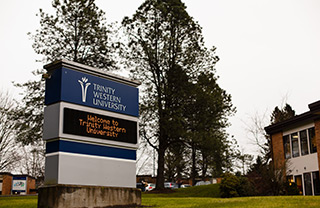
BC Supreme Court quashes Law Society’s decision not to accredit Trinity Western University’s law school: Trinity Western University v. Law Society of British Columbia, 2015 BCSC 2326

TWU law

Today Chief Justice Hinkson quashed the decision of the Benchers of the Law Society of British Columbia to submit the question as to whether to accredit Trinity Western University’s proposed law school or not to a referendum of the members after previously having decided to accredit the proposed law school. He found that the Benchers’ later decision was improper, was an improper fettering of the Benchers’ discretion and did not involve a proper balancing of the Charter interests as had been done by the Benchers in their earlier decision. He restored their earlier decision to accredit the proposed law school. His ruling can be found at Trinity Western University v. Law Society of British Columbia, 2015 BCSC 2326.  I will not go through the legal analysis in this post, at least not today. I will say, however, that this is obviously yet just one more step in the multi-province, multi-action process that will eventually culminate in the Supreme Court of Canada having to review its earlier decision in Trinity Western University v. British Columbia College of Teachers, 2001 SCC 31.

I remain

Constitutionally yours


Arthur Grant

The provinces cannot defeat the federal jurisdiction over bankruptcy by using indirect means

Embed from Getty Images

November 2015 was a banner month for Constitution-watchers. While other November decisions will be the subject of a separate post, this one focuses on three good old-fashioned division of powers decisions that were handed down by the Supreme Court of Canada on November 13, 2015. In Alberta (Attorney General) v. Moloney, 2015 SCC 51, 407 ETR Concession Co. v. Canada (Superintendent of Bankruptcy), 2015 SCC 52 and Saskatchewan (Attorney General) v. Lemare Lake Logging Ltd., 2015 SCC 53, the Court reviewed the questions of federal paramountcy and operational conflicts between otherwise validly enacted provincial and federal legislation.

Continue reading

The Liberal government’s plan for Senate reform to be implemented now

Embed from Getty Images

Yesterday, the Liberal government announced that they were moving forward with their plan to create a five member independent advisory panel to provide recommendations for future appointments to the Senate. As I understand it, the advisory panel will be comprised of three “federal” members and two ad hoc members from the province or territory with one or more vacancies to fill. The advisory panel will consider potential candidates and provide non-binding recommendations to the Prime Minister who in turn will recommend appointments to the Governor General. The panel will be charged with ensuring that the potential candidates are representative of men and women and the diversity of Canada, and that the candidates understand and appreciate the role that the Senate is to play in Canada’s Parliament. Within hours, British Columbia’s premier Christy Clark already indicated that these reforms are insufficient and that British Columbia will not participate, saying that the Senate has never represented British Columbia adequately.

First, do I think that these reforms are “constitutional”? Yes, I do. I am of the opinion that the reforms do not constitute amendments to the essential character and constitutional role of the Senate, namely, that of an appointed legislative body of second sober thought. Indeed, these proposed reforms taken on their own will actually reinforce and support the original role intended for the Senate by the drafters of the original British North America Act of 1867 (now named the Constitution Act, 1867). The process of removing the partisan qualities of Senate appointments will help to bring the Senate back to its original role of a legislative chamber of second sober thought, providing careful consideration of proposed legislative instruments. It would act as a means of ensuring proper crafting of bills. It could, if necessary (and this should only ever happen rarely and exceptionally), reject products that constitute partisan excesses of the House of Commons. These are all roles that will be enhanced by the proposed reforms and have been expressly acknowledged by the Supreme Court of Canada as being the proper constitutional roles for the Senate. In my opinion, no formal constitutional amendment is needed for these reforms.

Second, do I think that these reforms are sufficient? No, I do not. As a British Columbian, I understand Premier Christy Clark’s reaction to the reforms. If this is all that is planned for the Senate, then British Columbia will continue to be the most under-represented province at the federal level. Historic circumstances give provinces such as Nova Scotia and New Brunswick 1o senators each, and Ontario and Quebec 24 senators each, yet British Columbia arguably a region unto its own, 6 senators. One of the other roles of the Senate is to reflect Canada’s regional diversity – and I would add the word “adequately”. For these reforms, the new federal government must engage in the much feared federal/provincial/territorial (and I would add “/First Nation”) constitutional negotiations. Only by committing to these sorts of discussions will the other reforms as currently proposed by the Liberals ultimately be legitimized and supported by the constitutional participants to our federation. If such negotiations were to be proposed by the federal government, the Premier of British Columbia would be hard pressed not to participate in the advisory panel reforms announced yesterday.

I remain

Constitutionally yours

Arthur Grant

The new federal government and the Senate dilemma

Prime Minister Justin Trudeau and the new Liberal government face a unusual dilemma. They have an ambitious legislative agenda. They have a majority in the House of Commons. But they do not control the Upper House, the Senate. In that legislative chamber, the Conservative Party have 47 members. The Liberals cast their senators, now numbering 29, from their caucus. There are 7 independent senators. And 22 vacancies. Because the Liberal senators are no longer subject to party discipline, their votes cannot be controlled. One can imagine nevertheless that Liberal senators would be inclined to vote for the Liberal Party’s legislative agenda. But the Conservative Party Senators, however, have been strictly whipped, at least under the leadership of former Prime Minister Stephen Harper.

Continue reading

Homeless campers score a win in BC using s. 7’s life, liberty and security of the person: Abbotsford (City) v. Shantz, 2015 BCSC 1909

Embed from Getty Images

On Wednesday, October 21, 2015, Chief Justice Hinkson of the British Columbia Supreme Court gave effect to the arguments of an association called Drug War Survivors (“DWS”) that the City of Abbotsford’s bylaws that forbade sleeping in the City’s parks or the temporary erection of shelters without permits to be contrary to s. 7’s protection of security of the person under the Charter and were therefore of no force or effect. In an 81 page reasons for judgment in Abbotsford (City) v. Shantz, 2015 BCSC 1909 that reviewed the evolving jurisprudence under s. 7 of the Charter and specifically previous British Columbian decisions respecting a similar challenge of the City of Victoria’s bylaws, Chief Justice Hinkson made it clear that, while there was not a positive obligation on the part of the municipality to provide shelter to its homeless population, so long as there was insufficient shelter available, the municipality could not prohibit the homeless from doing what they needed to do in order to ensure their own life, liberty and security of their persons.

Continue reading

A Liberal majority government – what constitutional issues will it face?

Embed from Getty Images

I do not think that anyone forecast a Liberal majority of the magnitude that swept the country last night. Sixty-eight and a half percent of eligible Canadian electors voted last night. Prime Minister-elect Justin Trudeau said that Canadians wanted “change – real change”. I think he is right. But what sort of change will that include and will it involve constitutional issues? The answer I think is “yes”. I will touch upon only four issues which require constitutional review or involves constitutional values.

Continue reading

Election Day – it’s time to vote!

Embed from Getty Images

Today is Election Day in Canada. Canadian citizens have the right to vote for the candidate of their choice.

Just as a reminder, section 3 of the Canadian Charter of Rights and Freedoms provides:

3. Every citizen of Canada has the right to vote in an election of members of the House of Commons or of a legislative assembly and to be qualified for membership therein.

If you can vote today in this election, please do so. Not all people are so lucky as to have this right,… and this responsibility.

I remain

Constitutionally yours

Arthur Grant

Former Governor General Adrienne Clarkson advocates for transparency in Governor General’s role

Embed from Getty Images

Former Governor General Adrienne Clarkson wrote a compelling article in yesterday’s Globe & Mail. Her article, entitled “Minority governments: Time for the G-G to come out from behind the scenes” deals with the issue as to whether or not the decision-making process of the Governor General should be secretive or open.

Continue reading

Election 2015 – our constitution at work…

Embed from Getty Images

On October 19, 2015, Canada goes to the polls. The hurly burly of the Canadian version of democracy has been on display since early August when Prime Minister Stephen Harper asked the Governor General to dissolve Parliament and to call this election. What many of us do not appreciate is that this spectacle is probably one of the best examples of our constitution at work.

Continue reading