The unions’ renewed swagger – giving teeth to freedom of association

Wikipedia – Winnipeg General Strike 1919

In 1987, a majority of the Supreme Court of Canada held that “the constitutional guarantee of freedom of association in s. 2(d) of the Canadian Charter of Rights and Freedoms does not include, in the case of a trade union, a guarantee of the right to bargain collectively and the right to strike”: Reference Re Public Service Employee Relations Act (Alta), [1987] 1 SCR 313, per Le Dain J. Then, after testing the waters in some earlier cases, the Supreme Court of Canada reversed this ruling in 2007 in Health Services and Support – Facilities Subsector Bargaining Assn. v. British Columbia, 2007 SCC 27, at para. 86:

“We conclude that the protection of collective bargaining under s. 2(d) of the Charter is consistent with and supportive of the values underlying the Charter and the purposes of the Charter as a whole. Recognizing that workers have the right to bargain collectively as part of their freedom to associate reaffirms the values of dignity, personal autonomy, equality and democracy that are inherent in the Charter.”

While the constitutional status of the right to strike is now in doubt, there is no doubt that the courts, with the Supreme Court of Canada leading the way, are resetting the constitutional balance of power between trade unions on one hand and employer (and especially public sector employers) on the other.
Continue reading

Don’t cry for me, Argentina… A Tale of Two Countries

Peron_y_Eva_-_Acto_en_Plaza_de_Mayo_-17OCT1951[1]

Eva Peron – October 17, 1951 – Wikipedia

My wife and I have just returned from a trip to Argentina. It was a way for us to celebrate a milestone anniversary and we thought that we would choose somewhere in the world that would be different from the normal choices. Argentina sounded exotic and distant and so we booked our trip, not really knowing what to expect. Well, it has been an experience.

What has struck me is how many similarities there are between Canada and Argentina and yet, how many profound differences there are. Canada has about 35 million people. Argentina has about 40 million. Canada is a vast country – 4500 km wide. Argentina is the 6th largest country in the world, about 5000 km long. Canada has a northern identity (read Arctic). Argentina shoulders the Antarctic. Canada is blessed with natural resources. So is Argentina. Both are New World countries. Both were the subject of heavy European immigration. Both have strong indigenous populations. Both are federations. Argentina’s written constitution dates from 1853. Canada’s from 1867. With all these shared attributes, one might think that Argentina and Canada might be enjoying a similar fate in the world. But they clearly are not.

Continue reading

Freedom of expression and copyright in the Internet – The new realities of a cyberspace inhabited by copycats

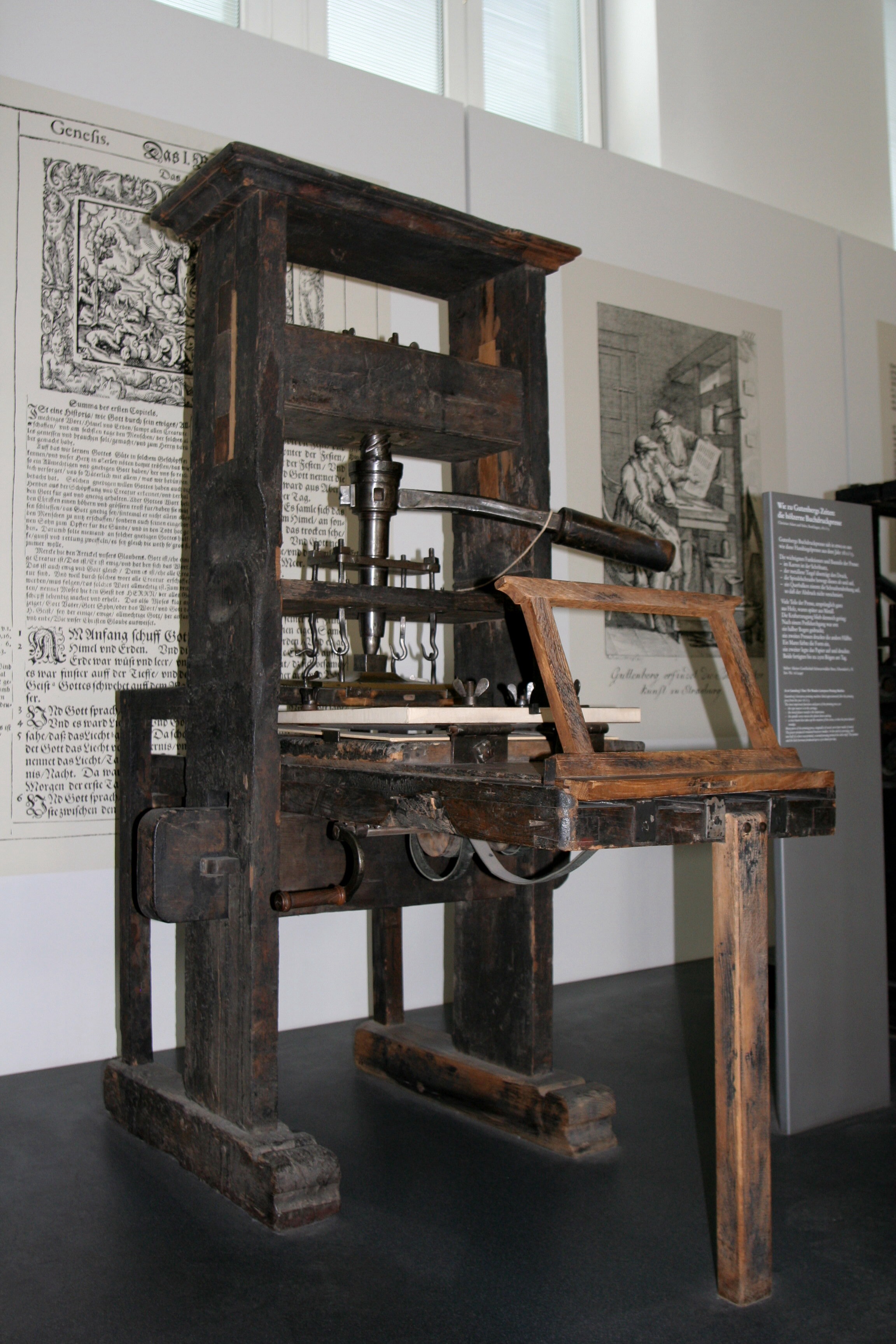
Printing press - Wikipedia

Printing press – Wikipedia

In an earlier post, “Constitutional protection of a collective exercise of freedom of expression: Alberta v UFWA”, I commented on how the Supreme Court of Canada was coming around to understanding the fundamental importance of the exercise of freedom of expression by a collectivity. I also noted that this shift could ultimately have wide-reaching ramifications in the Internet Age.

This post today will be the first instalment of several posts on freedom of expression and the Internet. But let me start by saying that the genie is now out of the bottle and it will not be going back.

Continue reading

New Name – Constitutionally Canadian

When I started up this blog, I had searched URL’s and found that “constitutionally-yours.com” was available, I liked the name and so I took it. After I had been doing this blog for about 6 weeks, I realized that there had been (or still is) another blog, run out of the United States under the same name “Constitutionally Yours”. It had not seen activity for a while but I thought, “Why create confusion?” So I have changed this blog to “Constitutionally Canadian”. The URL will be http://www.constitutionalcanadian.com. I look forward to continuing under this new moniker.

I still remain though

Yours constitutionally

Arthur Grant

PS Though I am sure everyone knows, yesterday, the Supreme Court of Canada granted leave to appeal in Carter v. Attorney General for British Columbia, the case on physician assisted suicide.

The Supreme Court’s Exercise in Introspection

Supreme Court This photo is from a file from the Wikimedia Commons.

On Wednesday, January 15, 2014, the Supreme Court of Canada is undertaking a rather interesting exercise. The Supreme Court justices will be hearing arguments from the Attorneys General of Canada, Quebec and Ontario as well as from certain intervenors in the Reference re Sections 5 and 6 of the Supreme Court Act which will determine whether Mr. Justice Marc Nadon has been properly appointed to sit amongst them.
Continue reading

A New Year: What Major Constitutional Issues Might Canada Face in 2014?

As we get back into the saddle after the holiday season, I thought that it might be fun to think about what might be some of the constitutional issues that Canada might face in 2014. Of course, like all crystal globe seers, I am almost certain to be wrong on some if not most of them. But it will be interesting to look back at this short list at the end of 2014 and see just how wrong I was. So, this is not supposed to be exhaustive but here are just a few of the issues that I think Canada will be dealing with in the year to come.

Continue reading

The Prostitution Laws Are Unconstitutional!: Attorney General (Canada) v. Bedford

prostitute

Image via Sydney Morning Herald

In an early Christmas gift to those of us who love constitutional law, the Supreme Court of Canada delivered its landmark ruling in Attorney General (Canada) v. Bedford, 2013 SCC 72 on Friday, December 20, 2013. While so many commentators refer to rulings of the Supreme Court as landmark, this one truly is a “landmark decision”. The unanimous judgment authored by Chief Justice McLachlin delivers clarification on a number of important issues and, of course, determines that the provisions of the Criminal Code prohibiting the use of bawdyhouses, living on the avails of prostitution and communication in a public place for purposes of prostitution are contrary to s. 7 of the Charter and cannot be justified by s. 1.

Continue reading

Carter v. AGBC – right to physician-assisted death and rule of law

Dying with dignity

This October, the British Columbia Court of Appeal released its reasons in Carter v. Attorney General for British Columbia, 2013 BCCA 435. The Court overturned the previous ruling of Madam Justice Lynn Smith who had cleared the way for physician assisted death. This case will undoubtedly be granted leave to appeal by the Supreme Court of Canada (see Case No. 35591).  The Court of Appeal was divided: Madam Justices Newbury and Saunders constituted the majority. Chief Justice Finch dissented.  Not only does the decision review the law respecting the right to a physician-assisted death but the judges also discussed the age-old principle of stare decisis, an essential element of the Anglo-Canadian constitutional principle of the rule of law.  Based on the Court of Appeal’s rationale, Canadians are not entitled to seek the assistance of a physician when at the end of their lives.  And the reason for that is that the Supreme Court of Canada ruled that the law imposing that restriction was constitutional twenty years ago in Rodriguez v. British Columbia (Attorney General), [1993] 3 SCR 519.

Continue reading

When does the failure to fund legal aid become unconstitutional?

images[2]

Today I attended a Provincial Council meeting for the Canadian Bar Associaton – British Columbia Branch. At that meeting, representatives presented a report on behalf of the Legal Services Society, the organization responsible for delivering legal aid services to British Columbians. Their report was shocking. British Columbia’s funding of legal aid has dropped from being one of the best in the country in 2002 to one of the worst in 2013. Cuts to funding of the Society have resulted in drastic cuts to the services, in terms of numbers of persons represented, in terms of the numbers of types of cases in which legal aid representation can be obtained and in terms of the numbers of lawyers participating in legal aid cases. And more cuts are still to come.

In my view, the question as to the quality and quantity of access in justice in our society poses a constitutional issue.  In a case that is going to the Supreme Court of Canada, Vilardell v. Dunham, 2013 BCCA 65 (sub nominem Trial Lawyers Association of British Columbia v. Attorney General for British Columbia in the Supreme Court of Canada), the general question as to the application of the constitutional principle of access to justice is squarely raised. That appeal  will focus on whether hearing fees charged by the Government of British Columbia to users of the justice system are an impediment to justice and whether, if they do impede access to justice, that impediment is unconstitutional by virtue of constitutional principle promoting and protecting access to justice (the case will be heard on April 14, 2014). This case will not deal with legal aid but will confirm access to justice as a constitutional principle of the Canadian federation.

At some point, when those able to access our system of justice are restricted to the rich (or those whose circumstances permit representation by way of a contingency fee agreement), the justice system becomes a system of injustice. To be effective, there must be a reasonable means of participating in the legal process for all users, not just the few.

I am not suggesting that all access to justice must be equal for all participants. But it should not be one that is solely based on income levels and status in society. Arguably, for many matters now, “justice” as meted out by the legal system in British Columbia has become illusory for a large part of our society. Self-represented litigants are increasingly frequent in the courts and, when pitted against an opposition that is legally represented, are often overwhelmed and feel unheard and unjustly treated. Many of them may well be unheard and unjustly treated – not through the fault of the judges hearing their cases but simply because the battle is so unfairly skewed in favour of the represented party (whether that party be a private person or corporation or the State). Many of these matters require legal representation in order to be properly presented and dealt with.

Should the constitutional principle of access to justice mandate at some stage that the Government open its purse strings or allocate greater resources to legal representation for those facing dire circumstances in the courts of the land? At some stage, I am of the view that must be the result. Failure to give effect to such a principle would be to condemn whole components of society to alienation and marginalization.

I do not know whether British Columbia is at that point now. The presentation from the Legal Services Society that I watched was chilling. The numbers and charts and graphs that were put up on the PowerPoint screen represented in an impersonal, clinical manner an increasing number of deeply despaired and helpless people. I would rather see our Government and Legislature give positive and real effect to the notion of access of justice than having the courts force them to do so. But at some point, a line is crossed and the only line of defence for the rights of the people remains the courts. In British Columbia, let’s hope that the question remains an academic one.

Constitutionally yours,

Arthur Grant

Nelson Mandela – 1918 – 2013

images4ZL7MFBN

Yesterday, the world lost a great human being. Nelson Mandela was one of the few people who could honestly say that he left the world a better place than when he came into it. His selflessness, his dedication to the concepts of equality and decency, his refusal to wreak retribution on those who had caused him so much misery stand as beacons, as guiding lights for us all. As we go forward in our lives, even as we consider Canada’s constitutional issues, we can draw much from Nelson Mandela’s words, spoken in relation to South Africa and the establishment of a new constitution in the post-apartheid era, but applicable in any country:

“Historical enemies succeeded in negotiating a peaceful transition from apartheid to democracy exactly because we were prepared to accept the inherent capacity for goodness in the other. My wish is that South Africans never give up on the belief in goodness, that they cherish that faith in human beings as a cornerstone of our democracy.”

Thank you Nelson Mandela. You have enriched us all.

Arthur Grant